Control units/ Engine control

Engine Management System

An engine control unit for spark-ignition engines: fuelling, ignition and closed-loop combustion feedback in one unit. Configurable from track-oriented builds to platforms seeking global homologation.
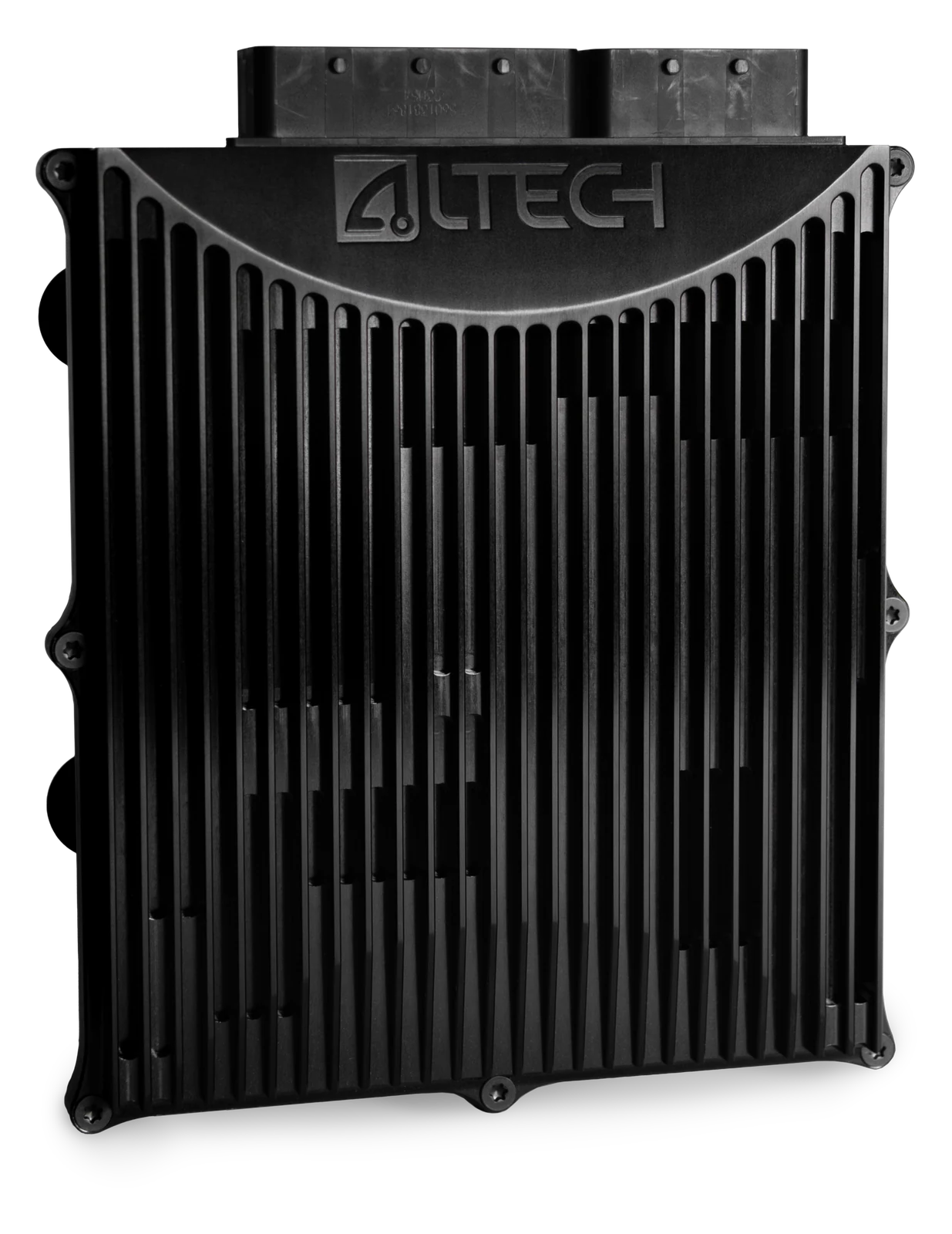
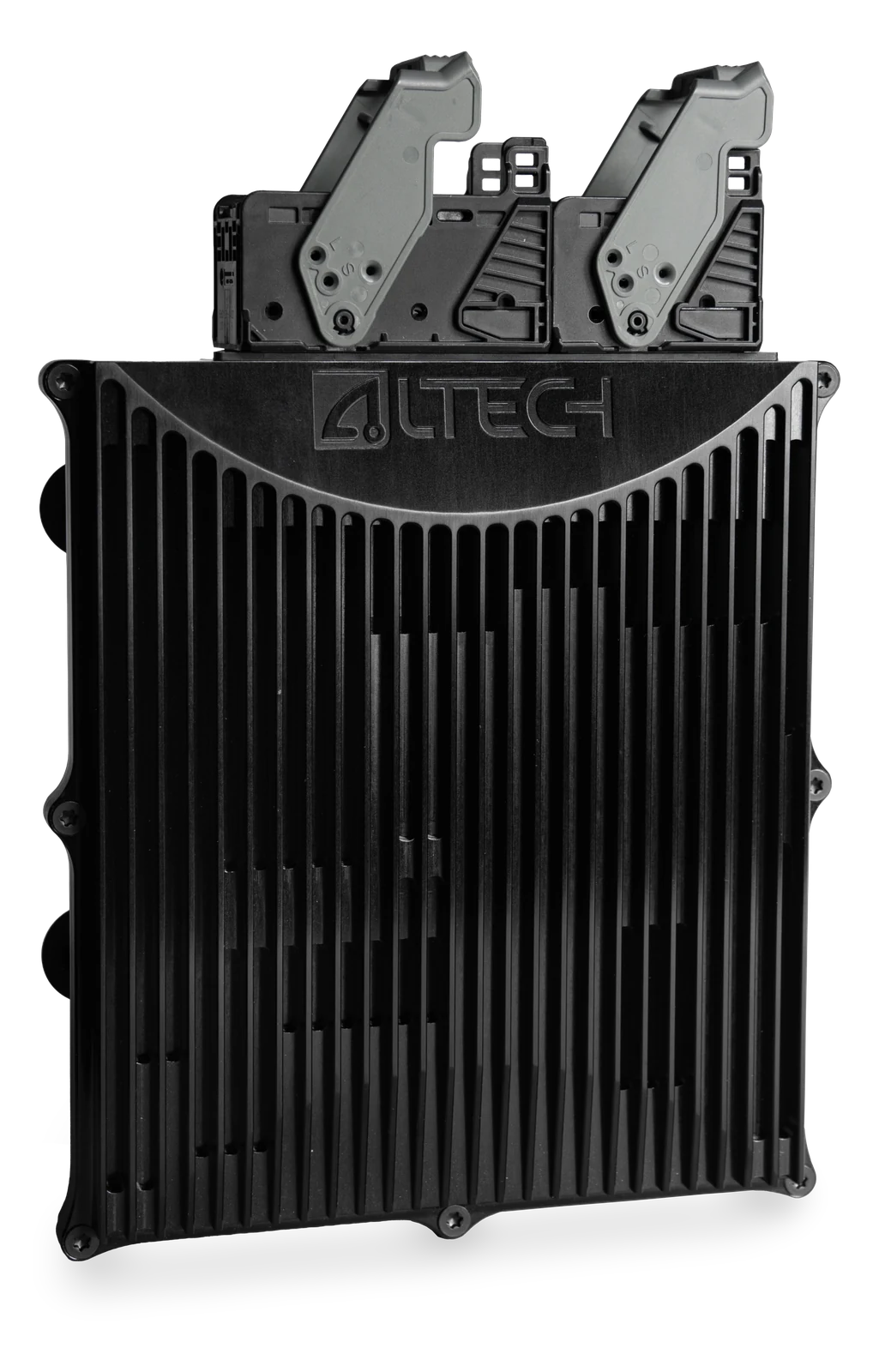
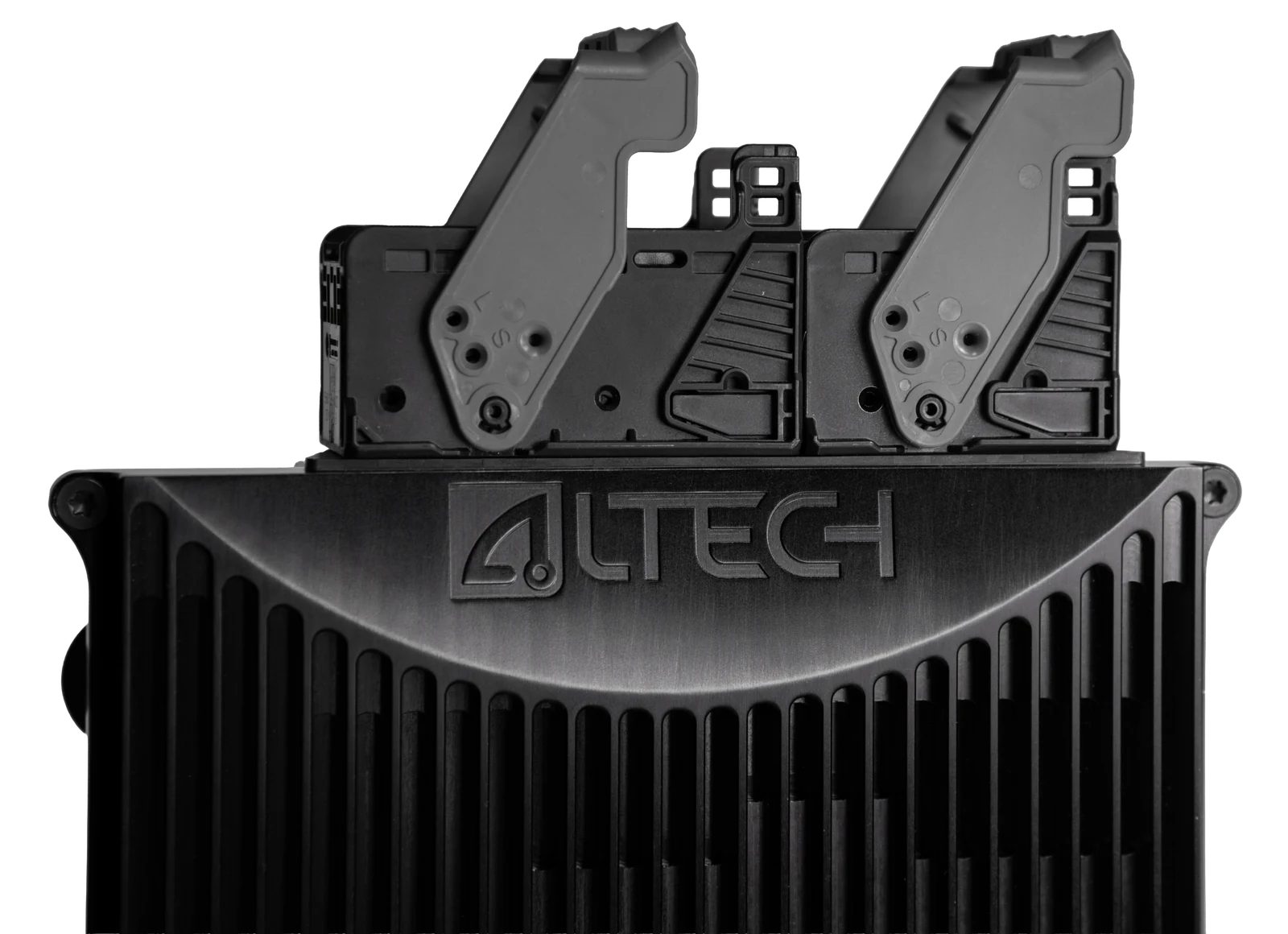
Altech control unit, front view, with both harness connectors mated
up to 16
Cylinders, PFI
up to 10
Cylinders, DI
16
Ignition outputs
7–32 V
Supply

Application areas

What it is used for

01

Fuelling

Sequential port injection up to 16 cylinders, direct injection up to 10, and bankable high-pressure pump outputs.

02

Ignition and knock

Sixteen crank-angle-timed ignition outputs and four differential knock inputs, DSP-filtered and angle-windowed.

03

Combustion feedback

Two wideband oxygen sensors, eight cylinder-pressure inputs and four thermocouples close the loop.

04

Air path and boost

Electronic wastegate and throttle control on protected drivers.

05

Position and speed

Crank tooth wheel, cam and turbo speed inputs, all measured against crank angle.

06

Calibration and logging

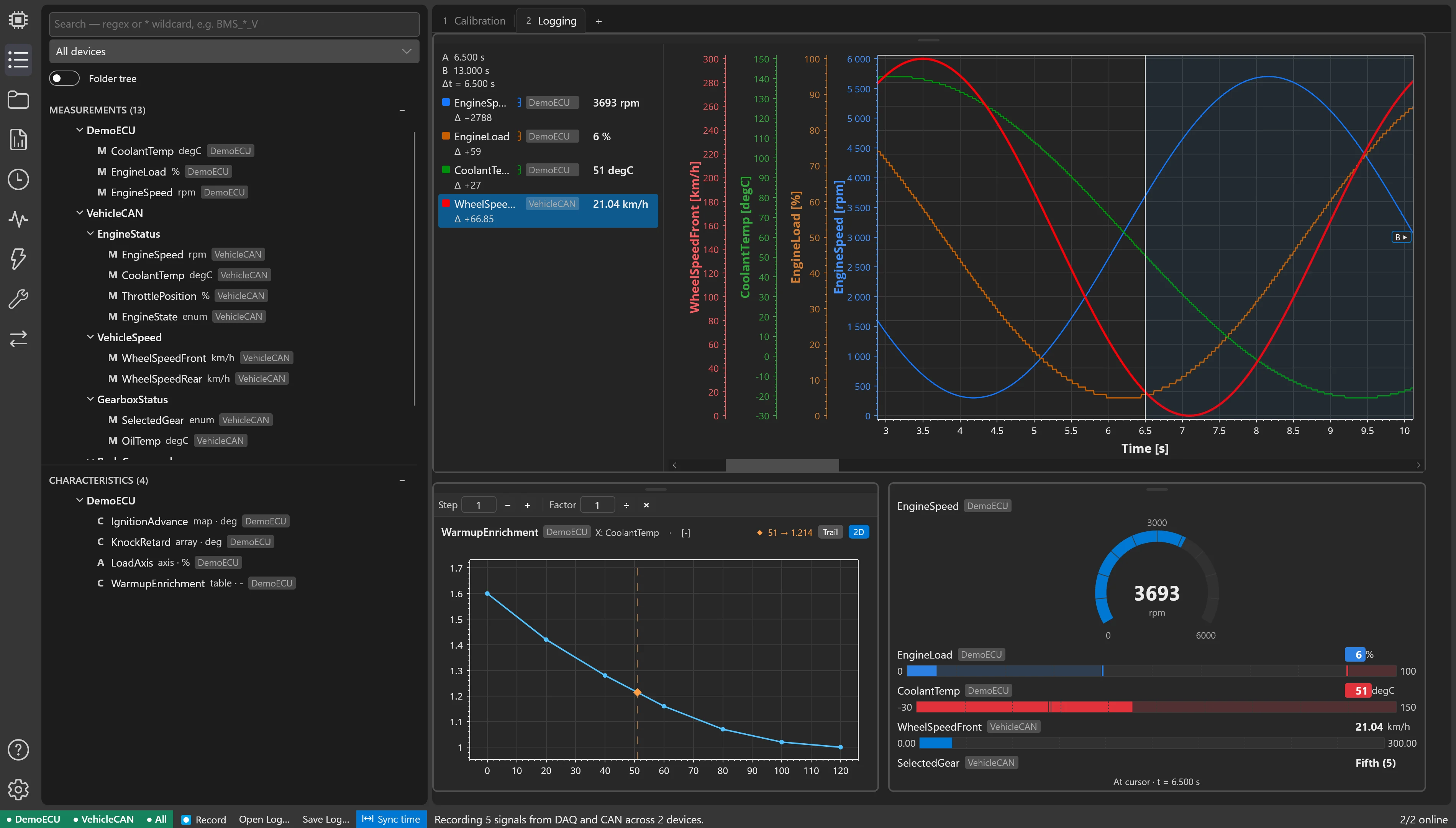
An A2L file and an XCP slave ship with the firmware, so every value and signal is live in CalTool.

Specification

Engine Management System

What this configuration adds to the common powertrain platform, listed further down.

Request the hardware guide
Port injection
16 outputs, multiple-pulse or fully sequential, for engines up to 16 cylinders. Unused outputs become general-purpose low-side drivers
Direct injection
10 outputs with a dedicated low-side driver per injector, switching to 100 kHz. Unused outputs become low-side or high-side drivers
Ignition
16 × 5 V outputs, 50 mA, timed to crank angle, for igniter modules and smart coils
Fuel pressure
High-pressure pump solenoid outputs, bankable for multi-pump installations
Position
Crank tooth wheel input plus high-frequency cam and turbo speed inputs, all angle-measured against the crankshaft
Knock
4 × differential inputs for piezo knock sensors, DSP-filtered and angle-windowed by the eTPU
Lambda
2 × wideband oxygen sensor inputs; Bosch and NTK supported, Denso as a board option
Cylinder pressure
8 × analogue inputs at 48 kHz bandwidth for in-cylinder pressure transducers
Exhaust temperature
4 × Type K thermocouple inputs, −200 °C to +1350 °C
Boost
Electronic wastegate control on 7.2 A low-side drivers, 15 kHz
Vehicle network
3 × CAN (ISO 11898), 2 × LIN (ISO 17987), 2 × SENT (SAE J2716); 120 Ω termination as a board option

Hardware

The unit

Common powertrain platform

Engine, transmission and vehicle control on one board

The Engine Management System and the Transmission & Vehicle Control Unit are configurations of the same board — one toolchain, one connector, one spare part.

Processor
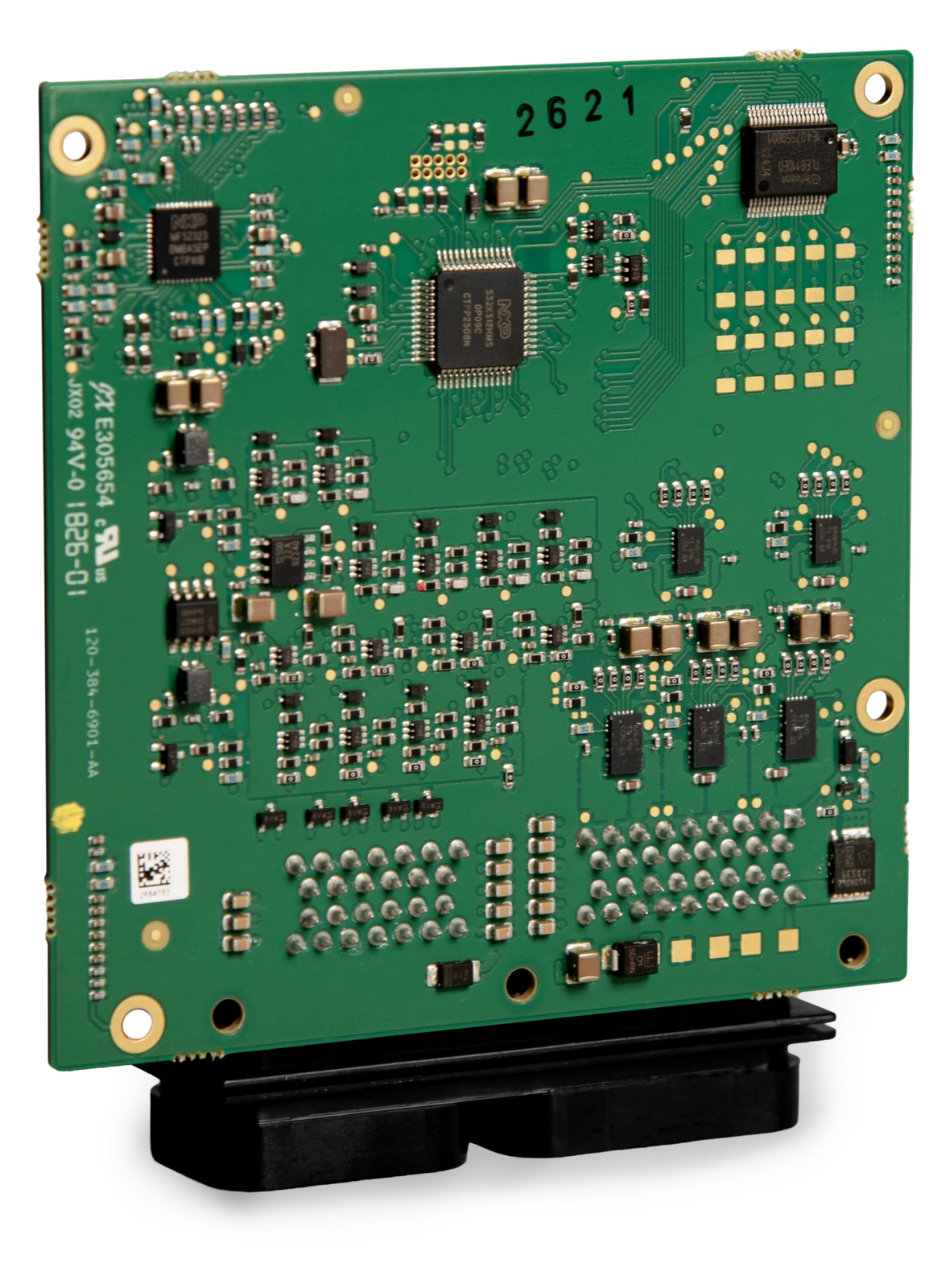
Automotive MCU at 264 MHz, two cores, lockstep on one
Memory
8 MB flash, 512 KB RAM
Supply
7–32 V operating, 36 V maximum; 12 V and 24 V variants configured in hardware
Connector
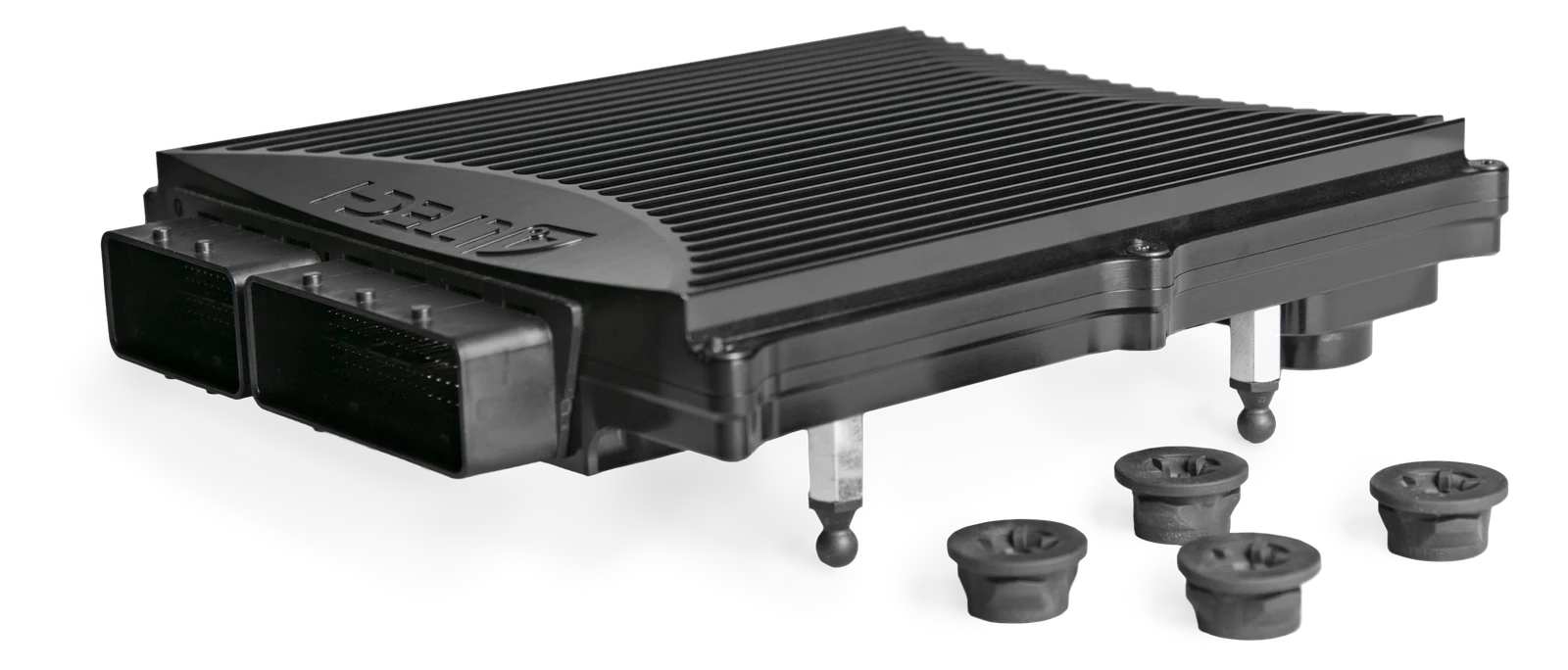
186-circuit Molex Compactus sealed hybrid, split 114 + 72, in 2.8 / 1.0 / 0.5 mm terminals
Sensor supply
3 × 5 V rails at 250 mA, continuously monitored by the MCU
Communication
3 × CAN, 2 × LIN, 2 × SENT. A hardware option trades four digital inputs for SENT receivers: 12 digital in and 6 SENT
Protection
Every input and output is ESD and overvoltage protected; drivers are voltage-clamped and short-circuit protected
Diagnostics
Output stages are diagnosed in hardware and report faults to the control software
Angle control
Injector, ignition and 1.75 A low-side outputs time to crank angle, as do the crank-referenced digital inputs

Included

Ships with CalTool

Every Engine Management System comes with its A2L file, an XCP slave and a CalTool licence, so calibration, logging, diagnostics and flashing are covered from day one.

Get in touch

Tell us where the Engine Management System would go

Contact us